

Why Choose Izasa?
Izasa Nakatanihonpo is a company that honors Japan’s culinary traditions while continuously embracing new challenges through advanced technology.

Heritage & Trust
Founded in 1921, we are a kakinoha-zushi maker with over 100 years of history. Starting as a rice merchant, we helped introduce this traditional regional cuisine across Japan. Today, our products are available at our own stores, major department stores, and Shinkansen station shops nationwide.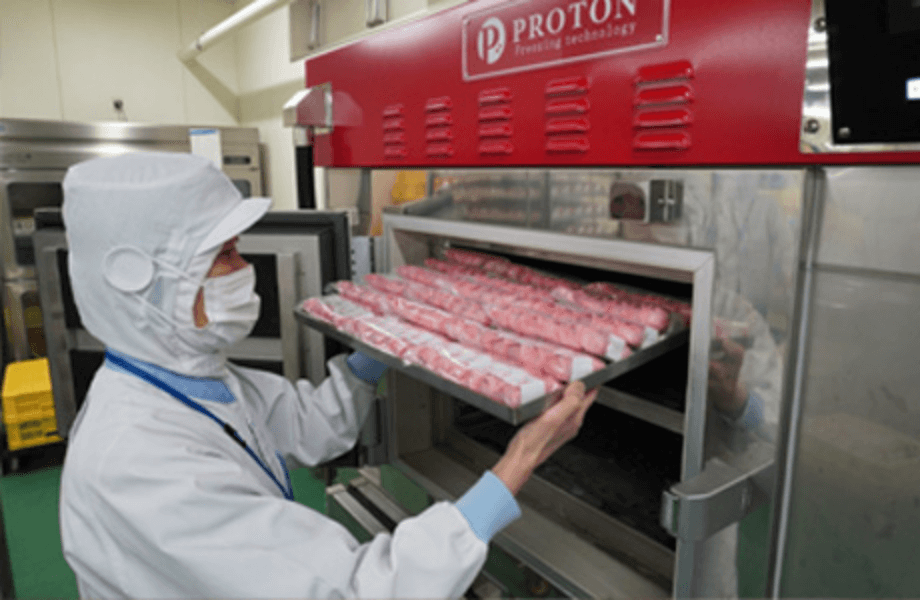
Advanced Freezing Technology
While preserving tradition, we actively pursue innovation. One such initiative is the development of frozen sushi using advanced freezing technology. By rapidly freezing freshly made sushi and enabling long-term storage, we have made it possible to deliver our products overseas while maintaining quality and taste.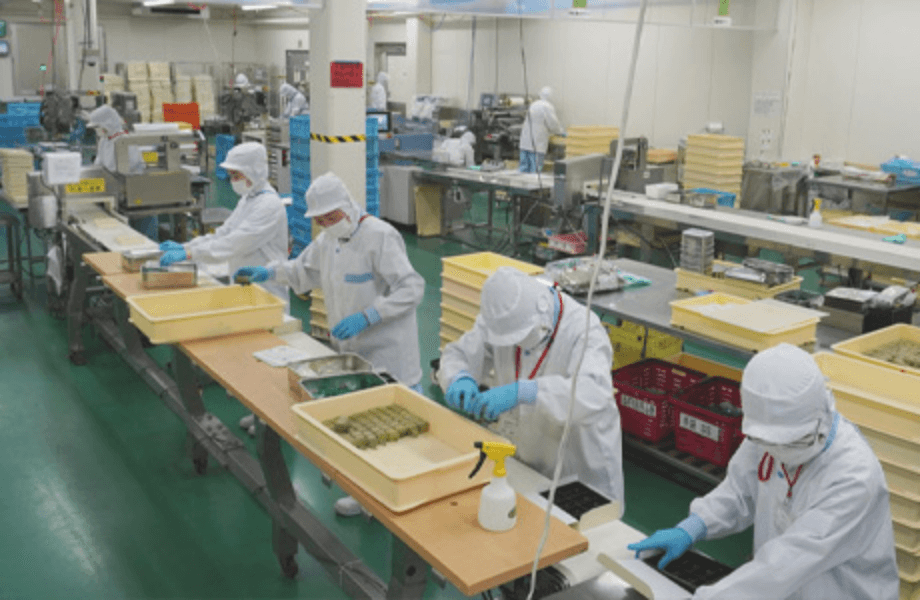
Commitment to Safety and Quality
Food safety and quality are our top priorities. At our main Tawaramoto Factory, products are manufactured under strict hygiene controls and certified under the JFS-B standard based on HACCP principles. We are also working toward obtaining internationally recognized food safety certifications.Proton Freezing Technology
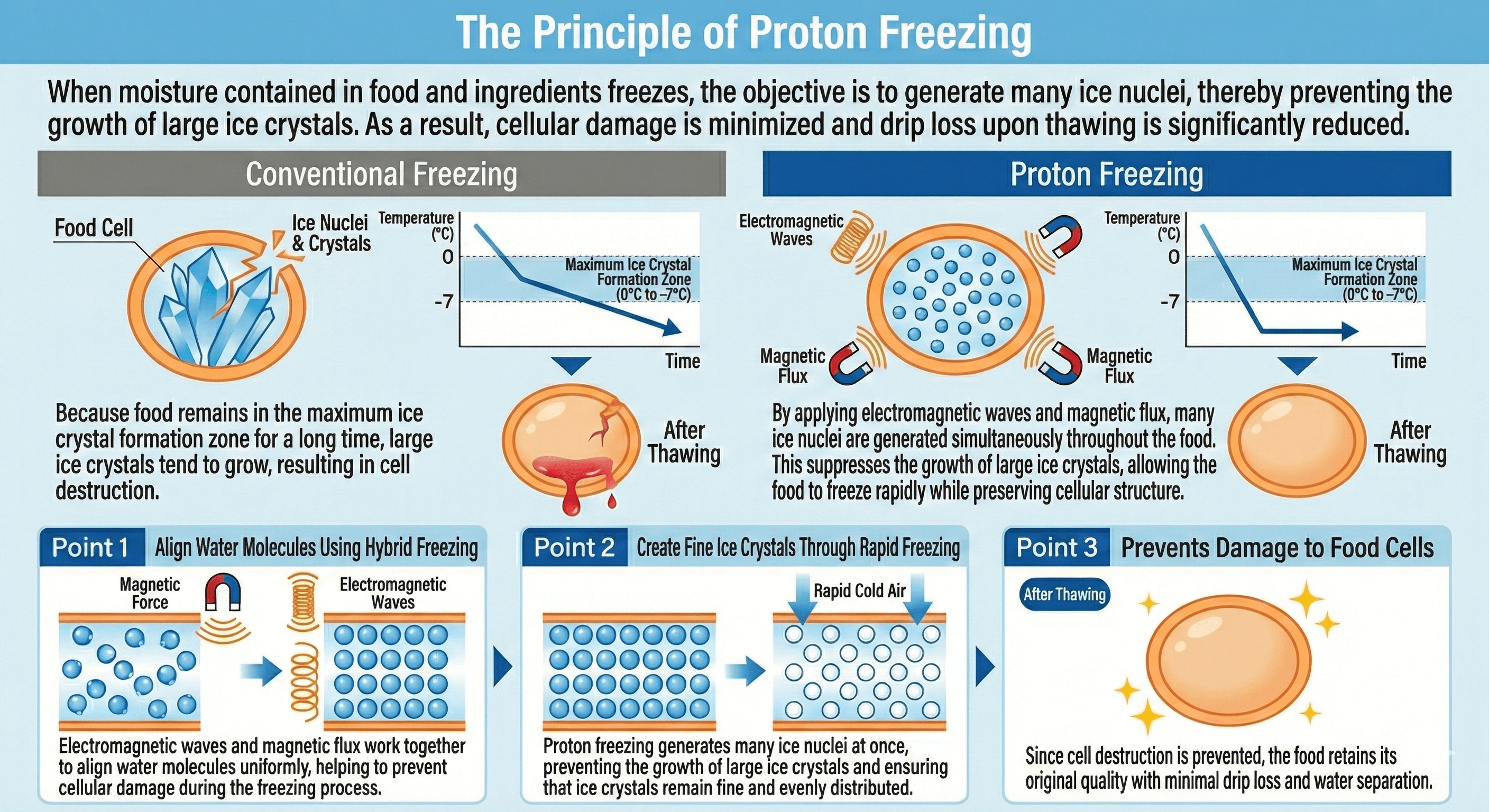
Proton Freezing is a hybrid freezing method that combines cold air with a uniform magnetic field and electromagnetic waves. In conventional freezing, the water inside food passes slowly through the temperature range of 0°C to -7°C, causing ice crystals to grow large. This leads to cell damage and results leads to the loss of umami components as drip during thawing. In contrast, Proton Freezing generates a large number of ice nuclei simultaneously, keeping ice crystals small and uniform and thereby suppressing cellular damage. As a result, drip and water separation during thawing are significantly reduced, preserving freshness, texture, and flavor in an excellent condition.
Minimization of Ice Crystal Formation
By combining cold air with magnetic fields and electromagnetic waves, a large number of ice nuclei are rapidly generated inside the food. This prevents the growth of large ice crystals and reduces cellular damage.
Significant Reduction of Drip (Loss of Umami)
Drip and water separation during thawing are minimized, allowing the texture, flavor, and appearance to remain close to that of fresh food.
High-Quality Frozen Distribution and Long-Term Storage
Because freshness is maintained during storage and transportation, this technology is ideal for commercial use, export, and high–value-added food products.
Why Choose Izasa?

JFS-B Certification
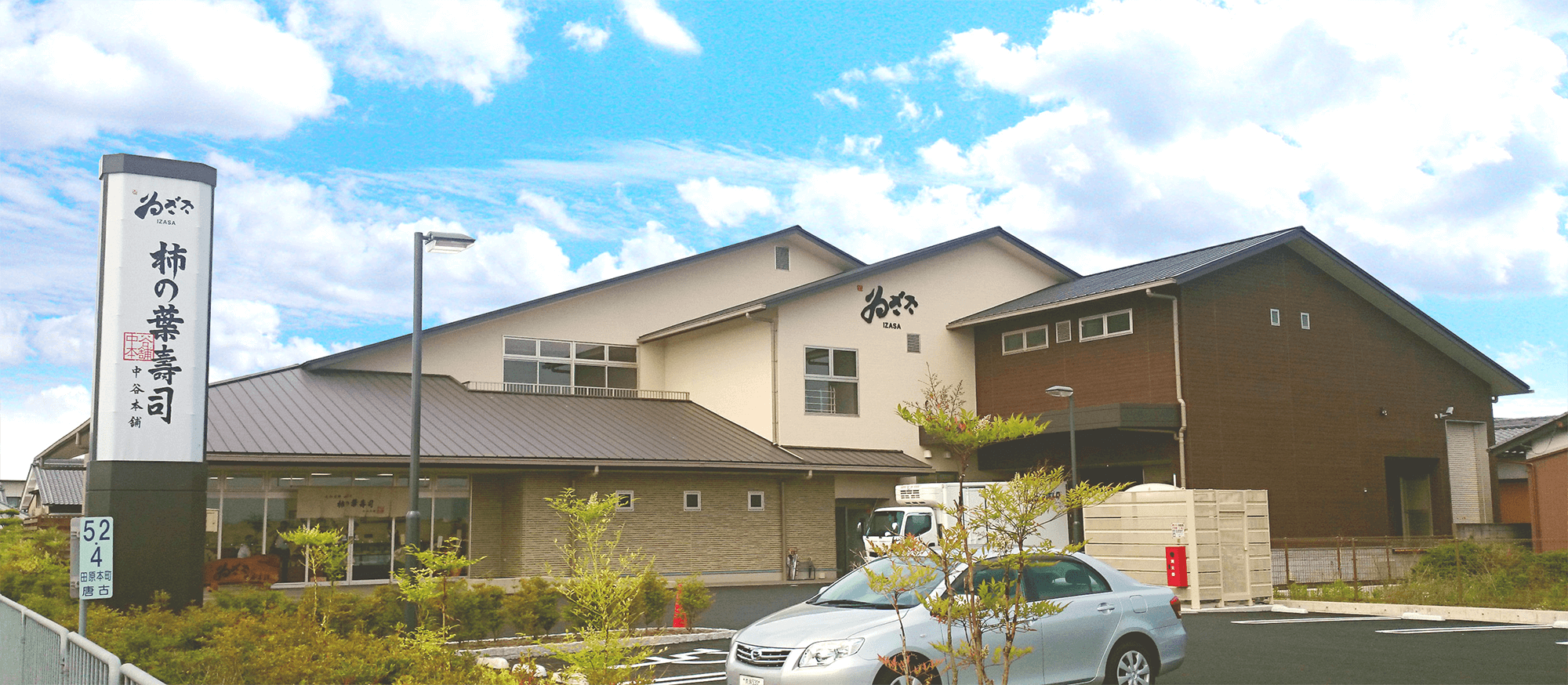
The JFS Standard is a food safety certification system developed and operated by the Food Safety Management Association of Japan (JFSM). Within this framework, the JFS-B Standard is a food safety management standard composed of three key requirements: a Food Safety Management System (FSM), Hazard Analysis and Critical Control Points (HACCP), and Good Manufacturing Practices (GMP). Our Tawaramoto Factory, completed in 2015, is certified under the JFS-B Standard.
Production Environment That Meets Export Standards
All products for export are manufactured at our main facility, the Tawaramoto Factory. Equipped with state-of-the-art facilities, the factory operates under strict temperature control and hygiene management to ensure safe and reliable products on a daily basis. In addition, the factory’s JFS-B certification provides third-party verification that our hygiene management is conducted in accordance with HACCP principles, meeting the requirements for export-ready production.
※State-of-the-art hygiene control at Tawaramoto FactoryTrade Specifications
| Origin | Nara, Japan |
|---|---|
| Storage Condition | Frozen (-18℃ or below) |
| Shelf Life | Approx. 180 days (Frozen) |
| Documents | Ingredients List, Spec Sheet, etc. |
For MOQ, lead times, and detailed product catalogs, please contact us directly.